Our favourite activities
The King’s Kitchen Garden: Impact and Landscape – a symposium organised by the Landscape and Energy Chair
Wednesday 03 June 2026
09:00 to 18:00
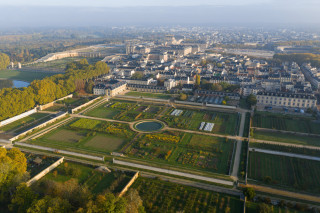
Location : Potager du Roi
Destination
10 rue du Maréchal Joffre
78000
Versailles
GPS coordinates
Latitude : 48.798918
Longitude : 2.123816
RER C from Invalides: Versailles Château Rive Gauche then 10 min. on foot
Line N from Paris-Montparnasse: Versailles Chantiers then 15 min. on foot
Line L from Paris-Saint-Lazare: Versailles - Rive Droite then 30 min. on foot or take bus line 6203
It is possible to park inside the Potager car park for people with reduced mobility (on presentation of proof) by ringing the outside intercom.
Line N from Paris-Montparnasse: Versailles Chantiers then 15 min. on foot
Line L from Paris-Saint-Lazare: Versailles - Rive Droite then 30 min. on foot or take bus line 6203
It is possible to park inside the Potager car park for people with reduced mobility (on presentation of proof) by ringing the outside intercom.
Event Organizer
Potager du Roi
Location
Potager du Roi
10 rue du Maréchal Joffre
78000
Versailles
Presentation
On 3 June 2026, the Landscape and Energy Chair at the École nationale supérieure de paysage is organising a day of discussions focusing on the role of landscape in environmental impact assessments and the ‘avoid, reduce, offset’ approach.
Since the Nature Conservation Act (1976), environmental impact assessments and the ‘avoid, reduce, compensate’ (ARC) approach have been key tools for reconciling development with environmental conservation. Fifty years after the legislation was introduced, what do those involved in development think of it? Are these mechanisms, and the concepts underpinning them, suited to the specific challenges of landscapes?
Does the landscape as a project, which invites us to ‘choose’ our living environment, offer alternatives to the landscape as a backdrop that ‘endures’ the impacts?
Between the need for assessment and debate, suspicions of subjectivity, difficulties in compensation and complex trade-offs, this conference aims to explore the strengths and limitations of approaches to shaping our landscapes through impact and compensation.
An essential opportunity for discussion to rethink the place of landscape in planning projects.
Target audience: elected representatives, project leaders, urban planners, landscape architects, design consultancies, associations, researchers, and engaged citizens.
Programme overview:
Feedback on specific projects (renewable energy).
Discussions with government departments, elected representatives, project leaders, engineering consultancies, landscape architects, associations and researchers.
Suggestions for improvement to give landscape a greater role in environmental assessments.
Programme for the day
Opening • ‘Impact, avoidance, reduction, compensation’ and ‘landscape’: key questions
The 1976 Nature Conservation Act: the role of landscape in debates surrounding its inception and development
Impact assessments and the ERC sequence: the respective roles of landscape and biodiversity.
An example of an impact assessment / energy project
Impact assessment: a comparison between France and Germany
Round table 1 • Impact assessment and landscape: benefits and limitations
Compensating for biodiversity and landscape through supply?
A landscape and ecological approach to localising impacts and offsets: the experimental approach of the Plaine de Crau
The Landscape Plan: a tool for project design and assessment?
Round table no. 2 • Avoid, reduce, offset: benefits and limitations
Conclusion • Landscape approach and assessment: what are the prospects?
Does the landscape as a project, which invites us to ‘choose’ our living environment, offer alternatives to the landscape as a backdrop that ‘endures’ the impacts?
Between the need for assessment and debate, suspicions of subjectivity, difficulties in compensation and complex trade-offs, this conference aims to explore the strengths and limitations of approaches to shaping our landscapes through impact and compensation.
An essential opportunity for discussion to rethink the place of landscape in planning projects.
Target audience: elected representatives, project leaders, urban planners, landscape architects, design consultancies, associations, researchers, and engaged citizens.
Programme overview:
Feedback on specific projects (renewable energy).
Discussions with government departments, elected representatives, project leaders, engineering consultancies, landscape architects, associations and researchers.
Suggestions for improvement to give landscape a greater role in environmental assessments.
Programme for the day
Opening • ‘Impact, avoidance, reduction, compensation’ and ‘landscape’: key questions
The 1976 Nature Conservation Act: the role of landscape in debates surrounding its inception and development
Impact assessments and the ERC sequence: the respective roles of landscape and biodiversity.
An example of an impact assessment / energy project
Impact assessment: a comparison between France and Germany
Round table 1 • Impact assessment and landscape: benefits and limitations
Compensating for biodiversity and landscape through supply?
A landscape and ecological approach to localising impacts and offsets: the experimental approach of the Plaine de Crau
The Landscape Plan: a tool for project design and assessment?
Round table no. 2 • Avoid, reduce, offset: benefits and limitations
Conclusion • Landscape approach and assessment: what are the prospects?
Pics
Pics
We also suggest...
From Saturday 19 to Sunday 20 September 2026
Saturday, Sunday
10:00 to 18:00
From Saturday 23 to Sunday 24 May 2026
Saturday
12:00 to 02:00
Sunday 17 May 2026
15:30 to 17:00
Sunday 31 May 2026
15:30 to 17:00
Sunday 28 June 2026
15:30 to 17:00
Sunday 26 July 2026
15:30 to 17:00