
Our favourite activities
Opéra Royal - Bach: CANTATES I "LE CHEMIN D'EMMAUS"
Thursday 11 June 2026
20:00 to 22:10
First half: 50 minutes Intermission Second half: 50 minutes
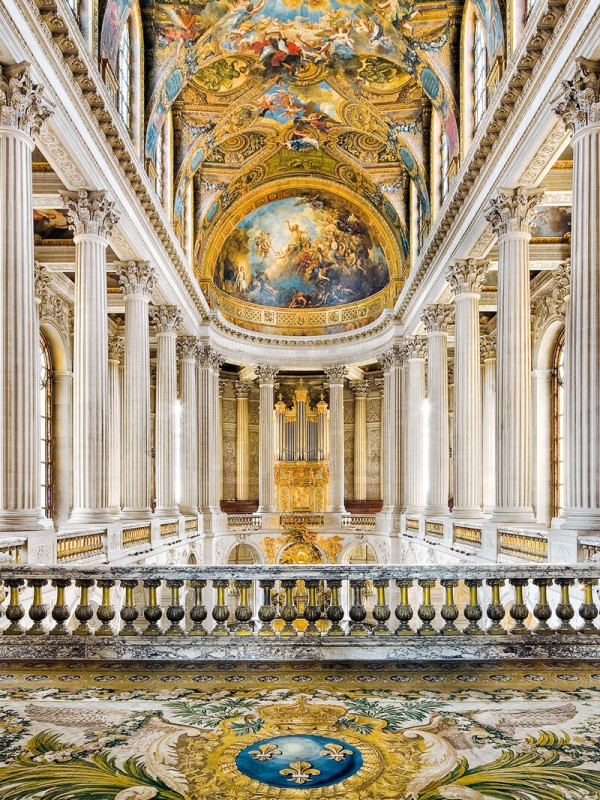
Location : Chapelle Royale
Destination
3 Pl. Léon Gambetta, 78000 Versailles
78000
Versailles
GPS coordinates
Latitude : 48.805021
Longitude : 2.122183
BY CAR
Motorway A13 - Versailles Notre-Dame exit
Motorway 186 - Versailles Centre exit
Free "Place d'armes" parking from 19:00
BY TRAIN
Gare Montparnasse > Gare Versailles Chantiers
Dreux, Mantes-la-Jolie, Rambouillet direction
Gare St. Lazare > Gare Versailles Rive Droite
Rive Droite direction
Paris RER C > Gare Versailles Rive Gauche - Château
Rive Gauche Château direction
Pont de Sèvres - Bus 171 > Versailles Château stop
Motorway A13 - Versailles Notre-Dame exit
Motorway 186 - Versailles Centre exit
Free "Place d'armes" parking from 19:00
BY TRAIN
Gare Montparnasse > Gare Versailles Chantiers
Dreux, Mantes-la-Jolie, Rambouillet direction
Gare St. Lazare > Gare Versailles Rive Droite
Rive Droite direction
Paris RER C > Gare Versailles Rive Gauche - Château
Rive Gauche Château direction
Pont de Sèvres - Bus 171 > Versailles Château stop
Event Organizer
Château de Versailles Spectacles
Location
Chapelle Royale
3 Pl. Léon Gambetta, 78000 Versailles
78000
Versailles
Presentation
The Leipzig Bachfest invited its audience to choose the works for two programmes of Bach cantatas, filled with masterpieces: John Eliot Gardiner met the audience's expectations by composing two programmes based on these recommendations
This first programme offers an illuminating dialogue between the tradition of the 17th-century German motet and the masterful artistry of Johann Sebastian Bach, a leading figure in Baroque music.
Michael Prætorius' motet Wie schön leuchtet opens the evening with an exclamation of joy: that of divine light personified by the morning star. This poetic and mystical image finds a striking echo in Bach's Cantata BWV 1, based on the same Lutheran chorale. Bach's rich writing magnifies the text with splendour and depth, setting the tone for this musical meditation.
Johann Hermann Schein's Ich bin die Wurzel returns to a more stripped-down form, rooted in sacred rhetoric. The work illustrates the art of the Germanic motet, where polyphony in the service of the word expresses an embodied spiritual truth.
The cantata Ich will den Kreuzstab gerne tragen, one of Bach's rare cantatas for solo voice, marks a moment of deep introspection: the acceptance of earthly suffering as a passage to eternal peace. The writing is poignant, almost operatic in its expressiveness.
The second part opens with another master of the German motet: Heinrich Schütz. His Ich bin eine rufende Stimme embodies the prophet's call in the desert, announcing the coming of Christ. The musical language is direct, but imbued with fervour.
With the cantata Bleib bei uns, denn es will Abend werden, Bach captures the anguish of twilight – both spiritual and earthly. This work of striking tenderness plunges us into the intimacy of the believer imploring the divine presence as night falls.
Schütz's motet Ich bin ein rechter Weinstock gently and clearly recalls the biblical image of Christ as the vine, source of life and spiritual fruitfulness.
Finally, Es erhub sich ein Streit brings the programme to a close with a triumphant fresco: the cosmic struggle between Good and Evil, in an exhilarating, jubilant, almost celestial musical language.
This musical journey, carried by the excellence of the Constellation Choir and Orchestra under the inspired direction of John Eliot Gardiner, highlights the theological and artistic inspiration that runs through more than a century of German sacred music.
Michael Prætorius' motet Wie schön leuchtet opens the evening with an exclamation of joy: that of divine light personified by the morning star. This poetic and mystical image finds a striking echo in Bach's Cantata BWV 1, based on the same Lutheran chorale. Bach's rich writing magnifies the text with splendour and depth, setting the tone for this musical meditation.
Johann Hermann Schein's Ich bin die Wurzel returns to a more stripped-down form, rooted in sacred rhetoric. The work illustrates the art of the Germanic motet, where polyphony in the service of the word expresses an embodied spiritual truth.
The cantata Ich will den Kreuzstab gerne tragen, one of Bach's rare cantatas for solo voice, marks a moment of deep introspection: the acceptance of earthly suffering as a passage to eternal peace. The writing is poignant, almost operatic in its expressiveness.
The second part opens with another master of the German motet: Heinrich Schütz. His Ich bin eine rufende Stimme embodies the prophet's call in the desert, announcing the coming of Christ. The musical language is direct, but imbued with fervour.
With the cantata Bleib bei uns, denn es will Abend werden, Bach captures the anguish of twilight – both spiritual and earthly. This work of striking tenderness plunges us into the intimacy of the believer imploring the divine presence as night falls.
Schütz's motet Ich bin ein rechter Weinstock gently and clearly recalls the biblical image of Christ as the vine, source of life and spiritual fruitfulness.
Finally, Es erhub sich ein Streit brings the programme to a close with a triumphant fresco: the cosmic struggle between Good and Evil, in an exhilarating, jubilant, almost celestial musical language.
This musical journey, carried by the excellence of the Constellation Choir and Orchestra under the inspired direction of John Eliot Gardiner, highlights the theological and artistic inspiration that runs through more than a century of German sacred music.
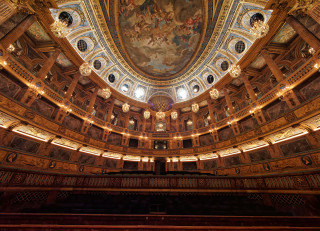
Pics
Pics
Prices
GROUP RATES: for more information, please visit our page dedicated to works councils and groups.
The ticketing team is available by telephone on +33 (0)1 30 83 78 89 (Monday to Friday from 11 a.m. to 6 p.m.) or in person at our ticket office and shop (3 bis rue des Réservoirs, 78000 Versailles; Monday to Friday from 11 a.m. to 6 p.m., and on Saturdays when there are shows (excluding Grandes Eaux Musicales) from 2 p.m. to 5 p.m.).
The ticketing team is available by telephone on +33 (0)1 30 83 78 89 (Monday to Friday from 11 a.m. to 6 p.m.) or in person at our ticket office and shop (3 bis rue des Réservoirs, 78000 Versailles; Monday to Friday from 11 a.m. to 6 p.m., and on Saturdays when there are shows (excluding Grandes Eaux Musicales) from 2 p.m. to 5 p.m.).
For all PRM/PSH bookings, we recommend that you contact us directly at billetterie@chateauversailles-spectacles.fr or on 01 30 83 78 89.
We also suggest...
Thursday 18 June 2026
20:00 to 22:50
Tuesday 06 October 2026
20:00 to 22:00
Friday 16 October 2026
19:30 to 22:30
Tuesday 03 November 2026
20:00 to 21:00
Saturday 07 November 2026
19:00 to 22:30
Thursday 12 November 2026
20:00 to 21:00
Tuesday 17 November 2026
20:00 to 21:15